
Toys
-
Regular price £14.99Regular price
-
Regular price £15.99Regular price
-
Regular price £19.99Regular price
-
Regular price £21.99Regular price
-
Regular price £16.41Regular price
-
Regular price £14.99Regular price
-
Regular price £8.99Regular price







Toys
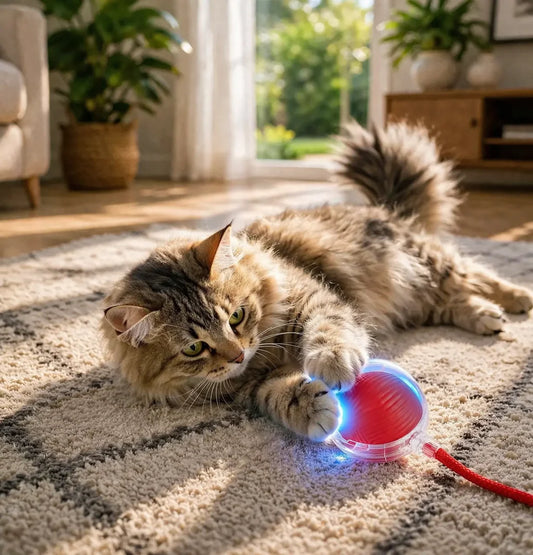
Cat toys aren't just entertainment, they're an outlet for a hunting instinct that doesn't switch off just because a cat lives entirely indoors. This collection covers feather toys, puzzle toys and catnip toys, built around the different stages of a cat's natural stalk, chase and pounce sequence.
Why indoor cats need regular play
An outdoor cat spends real time and energy on the hunting process even if a hunt rarely ends in a catch, and that process matters to a cat's wellbeing almost as much as the outcome. An indoor cat without that outlet often redirects the same instinct toward ankles, curtains, or anything that moves unexpectedly across the floor. Regular, even short, play sessions give that instinct somewhere legitimate to go, which tends to calm overall behaviour more than almost any other single change.
Feather wands and teaser toys: interactive play
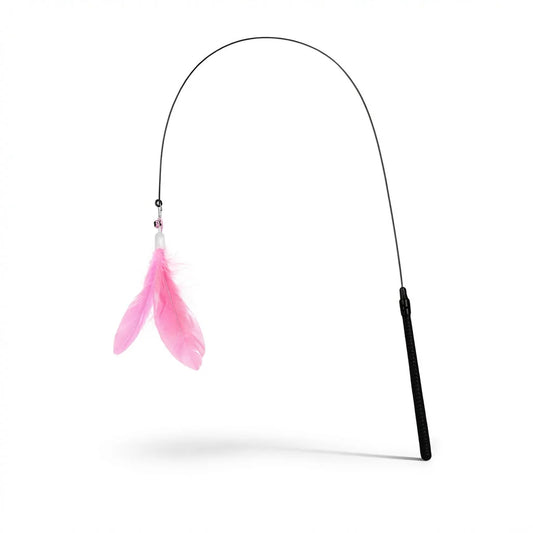
Feather wands and teaser toys work best as interactive play, since you controlling the movement mimics fleeing prey far more convincingly than any toy left static on the floor. Varying the movement, quick darts followed by stillness, tends to hold a cat's interest longer than constant, predictable motion, and letting your cat actually catch the toy occasionally keeps the whole sequence satisfying rather than endlessly frustrating.
Puzzle toys: solo stimulation
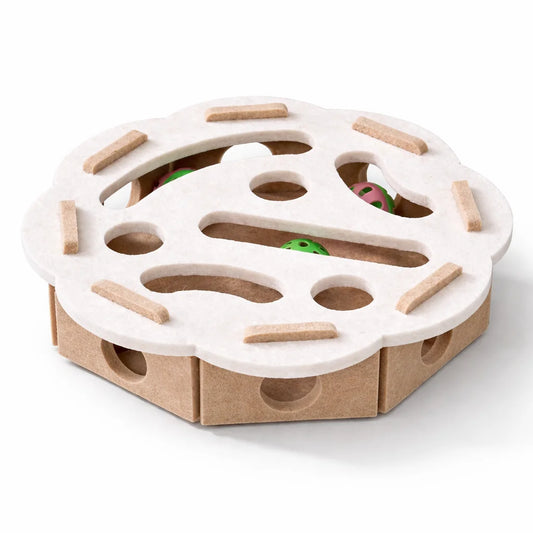
Puzzle toys turn feeding or treats into a small hunting exercise your cat can work through alone, which is particularly useful for cats left alone for parts of the day, or simply for adding mental stimulation alongside physical play. Starting with an easier puzzle and increasing difficulty over time keeps the challenge appropriately matched to your cat's experience rather than becoming frustrating too quickly.
Catnip and silvervine toys: a different kind of response
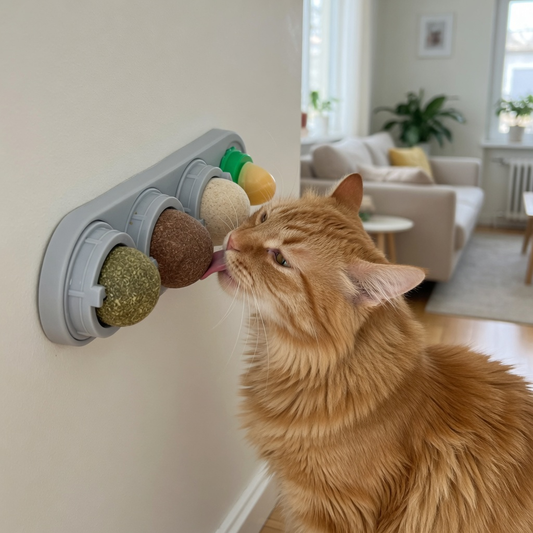
Catnip and silvervine trigger a scent based response in many, though not all, cats, often resulting in rolling, rubbing or a short burst of excited play. Not every cat responds to catnip, and sensitivity can also change with age, so it's worth trying a toy more than once, and at different times, before assuming your cat simply isn't interested.
Keeping toys interesting over time
Cats habituate to toys that stay out permanently, losing interest even in something they initially loved. Rotating a small selection of toys in and out of use, rather than leaving everything accessible all the time, tends to keep each toy feeling more novel and worth engaging with when it reappears.
Toy safety
Small parts, loose feathers, bells or string style attachments should always be supervised during play rather than left with a cat unattended, since these are the elements most likely to be chewed off and swallowed. Checking toys periodically for wear, and retiring anything that's started to fray or come apart, is a simple habit that avoids most avoidable toy related incidents.
Group play in multi-cat homes
Interactive toys used with more than one cat at once can sometimes trigger competition rather than shared play, particularly between cats that already have some tension between them. Separate, short one on one play sessions with each cat individually often work better for building confidence and reducing resource guarding than expecting cats to happily share a single toy.
Matching toys to age and energy level
Kittens and younger cats generally want faster, more frequent, higher energy play, while older cats often prefer shorter, gentler sessions that don't demand sustained high speed chasing. Puzzle toys tend to suit older or less mobile cats particularly well, since they provide mental stimulation without requiring the same physical intensity as a feather wand session.
A quick checklist before you buy
If your cat is often left alone during the day, lean toward puzzle and solo toys that don't require your direct involvement to be effective. If you're mainly looking to bond through active play together, feather wands and teaser toys make far better use of the time you do have available for interactive sessions.
Browse the full range below and mix interactive toys for supervised play with solo puzzle and catnip toys for the times you're not available to play directly.
Keeping them busy and tidy? See also our Scratching Posts, Cat Trees & Climbing Frames and Grooming.